











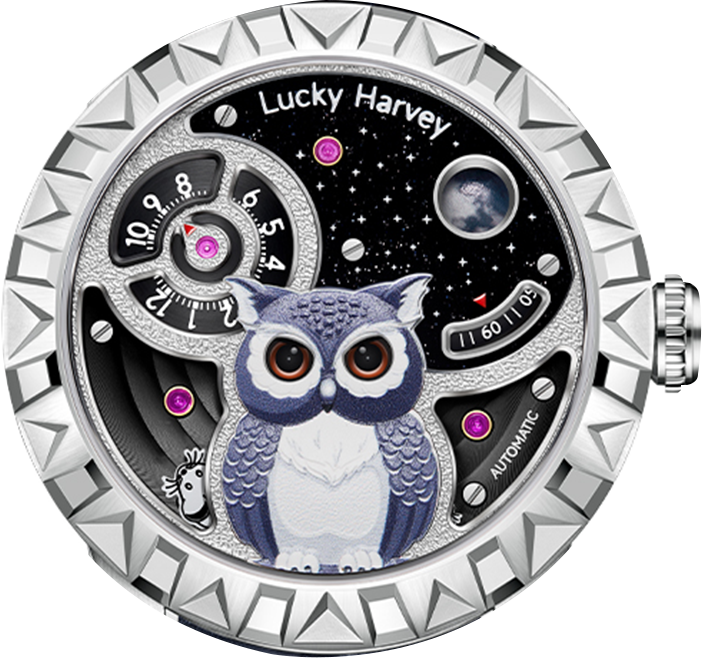
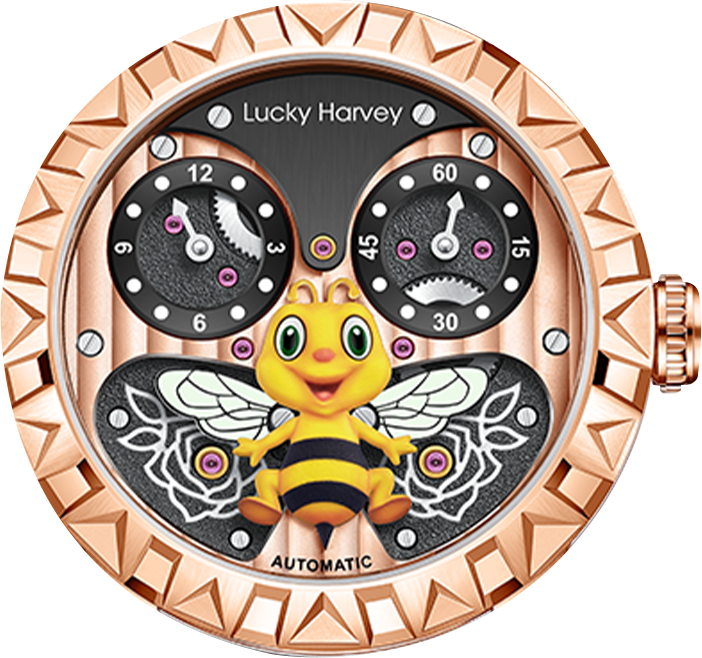

A luxury automatic watch is the rare luxury object that demands a small amount of work from the owner. Unlike a leather bag or a luxury car, you cannot just buy it, use it, and forget about it. An automatic movement is a tiny mechanical organism — hundreds of components arranged with the precision of Swiss-inspired horology, oscillating 691,200 times every twenty-four hours, lubricated by oils that thin and thicken with temperature. It needs attention. Not much, but the right kind.
This guide is the owner's manual you wish came with your watch. It covers winding, wearing, storage, water resistance, magnetism, service intervals, and the small daily habits that separate a watch that runs beautifully for fifty years from one that needs major service in five.
How an Automatic Watch Actually Works
Before you can care for an automatic watch properly, it helps to understand what is happening inside it. An automatic watch is powered by a wound spring — the mainspring — that releases energy slowly through a precisely regulated gear train. The brilliance of the automatic design is that the spring is wound automatically by the motion of your wrist: a small rotor inside the watch swings as you move, and that swinging motion winds the mainspring in tiny increments throughout the day.
A fully wound automatic watch typically holds 38–42 hours of power reserve — meaning it will keep running for nearly two days if you take it off. Higher-end calibres reach 70 or 80 hours of reserve. When the reserve runs out, the watch stops, and you need to wind and reset it.
This single mechanical principle — that wrist motion replaces a battery — is what makes an automatic watch a quietly extraordinary object. It also dictates almost everything about how to care for it.
How to Wind an Automatic Watch
If your watch has stopped, or you are wearing it for the first time, you need to wind it manually. The process is simple but easy to do wrong.
Step 1: Remove the Watch From Your Wrist
Winding the watch on your wrist puts sideways pressure on the crown stem — the small shaft connecting the crown to the movement — which over years can wear out the stem. Always take the watch off before winding.
Step 2: Unscrew the Crown (If Required)
Most luxury automatic watches use a screw-down crown for water resistance. Unscrew the crown by turning it counter-clockwise until it pops out into the winding position. Forcing a screwed-down crown is the single most common source of damage to a new owner's watch.
Step 3: Wind Slowly
With the crown in position 0 (the closest position to the case), turn it clockwise. You will feel slight resistance and hear faint, soft clicks. Wind for 20 to 30 full turns to bring the mainspring to full tension. Stop when you feel firm resistance — the mainspring is fully wound and will not accept more.
Step 4: Set the Time
Pull the crown out to the time-setting position (usually position 2 — the furthest position). Turn the crown to set the time. Always set the time forward (clockwise). Never set it backward across midnight if the watch has a date function — this can damage the date wheel.
Step 5: Push the Crown Back In and Screw Down
Push the crown firmly back into position 0 and screw it down clockwise until snug. Do not overtighten. The screw-down crown is what protects the watch from water and humidity.
Daily Wear Habits
An automatic watch on the wrist is happiest when worn regularly. A few daily habits will keep it running optimally.
Wear for at least 8 hours a day, several days a week. The automatic rotor needs sustained motion to keep the mainspring fully wound. A watch worn only on weekends will run down between wears.
If you are not going to wear the watch for several days, let it run down. Storing a partially wound automatic for extended periods is fine, but a fully wound watch left static for a week is harder on the mainspring than a relaxed one.
Avoid magnets. Phones, laptops, induction cooktops, refrigerator magnets, and speaker grilles can magnetise the hairspring inside your watch, which dramatically affects accuracy. Keep your watch at least 10 cm from these surfaces.
Avoid sudden temperature changes. Going from an air-conditioned office to a hot car park is fine. Going from a hot bath to a cold pool is hard on the gaskets that keep water out.
Wipe the watch down at the end of each day. A quick wipe with a microfibre cloth removes skin oil, sweat, and dust before they can build up and stain the case or scratch the crystal.
Water Resistance: What the Numbers Actually Mean
Water resistance ratings are one of the most misunderstood specifications in watchmaking. The ratings are measured in static laboratory conditions — the watch sitting still in pressurised water — not in real-world conditions where impact, movement, and temperature shift dramatically affect what the seals can handle. A practical guide.
3 ATM (30m): Splash-resistant. Survives rain and hand-washing. Do not swim in it.
5 ATM (50m): Survives short showers and shallow swimming. Do not dive.
10 ATM (100m): Suitable for swimming and snorkelling. The standard for most Lucky Harvey watches with screw-down crowns and casebacks. View the water-resistant luxury watch collection for current options.
20 ATM (200m) and above: Dive-rated. Suitable for scuba diving and high-impact water activity.
Three rules apply across every rating. Never press buttons or pull the crown underwater. Never expose the watch to hot water (hot tubs, showers, saunas) — heat expands metal and shrinks gaskets, breaking the water seal. Have the water resistance pressure-tested every 18–24 months — gaskets degrade over time even on a watch that has never been swum in.
Storage: When You Are Not Wearing It
The right storage protects your watch from dust, magnets, temperature swings, and accidental impacts. Three options.
1. The Watch Box
The most common storage. A leather or wooden watch box with a soft fabric lining keeps the watch protected, accessible, and dust-free. Store the watch with the crown facing inward (away from any opening) to reduce the chance of catching the crown on the box edge when removing the watch.
2. The Watch Winder
A watch winder is a powered storage device that rotates the watch slowly when you are not wearing it, keeping the automatic rotor in motion and the mainspring wound. Winders are essential for owners who rotate between several watches and want each to stay running and timed.
The winder rotation should match the watch's specifications — typically 650 to 850 turns per day. Excessive winding wears the mainspring; insufficient winding lets the watch stop. A good winder has adjustable rotation cycles.
3. The Safe
For high-value pieces, a small home safe with a watch insert provides theft protection alongside dust control. Avoid storing watches near any magnetic safe components.
Magnetism: The Invisible Killer
Magnetism is the single most underestimated threat to an automatic watch in modern life. We are surrounded by magnetic fields — phones, laptops, electric motors, MRI machines, induction cooktops, magnetic phone holders in cars, even some refrigerator magnets. When a magnetic field passes through the watch movement, the hairspring (the tiny coiled spring that regulates timekeeping) can become magnetised, causing the watch to gain or lose dramatic amounts of time per day.
A magnetised watch may run 30 to 300 seconds fast per day — enough to make it useless as a timepiece. The fix is straightforward: a watchmaker uses a demagnetiser (a device that produces a controlled alternating field) to neutralise the magnetism. The service takes ten minutes and costs about ₹500.
Prevention is easier. Keep the watch at least 10 cm from phones, laptops, magnetic phone holders, and speakers. Be especially careful with magnetic clasps on bags and jackets — these can magnetise a watch faster than a phone because they sit directly against the watch when the bag is on your shoulder.
Service Intervals
An automatic watch should be serviced approximately every 4 to 5 years for standard movements, and every 3 to 4 years for chiming, perpetual calendar, or other complicated movements. A full service includes:
Complete disassembly of the movement, cleaning of every component in an ultrasonic bath, replacement of all gaskets, replacement of any worn pivots or jewels, re-lubrication with movement-grade oils, full timing calibration on a regulating machine, and final water-resistance pressure testing.
The service typically takes 4–6 weeks and costs between ₹8,000 and ₹25,000 depending on the complication. Lucky Harvey watches are serviced through the brand's Authorised Service Center in India, with shipping covered both ways. Contact the Authorised Service Center for current service arrangements.
What to Avoid
Five behaviours will dramatically shorten the life of an automatic watch.
1. Setting the date between 9 PM and 3 AM. The date wheel is engaging during this window. Forcing the date manually can damage the date change mechanism.
2. Winding the watch on your wrist. Sideways pressure on the crown stem wears the stem and the keyless works inside the movement.
3. Showering or swimming in hot water. Heat is harder on water resistance than depth.
4. Using harsh chemicals to clean the watch. Ammonia, acetone, and bleach attack gaskets and the AR coating on the crystal. A microfibre cloth and lukewarm soapy water are all you need.
5. Skipping service intervals. The oil inside the movement thickens over time, increasing friction. A watch that runs without service for ten years can suffer wear that requires component replacement rather than just lubrication.
Frequently Asked Questions
How often should I wind my automatic watch?
If you wear the watch daily for at least 8 hours, you do not need to wind it. If you have not worn it for two or more days and it has stopped, wind it 20–30 turns to fully tension the mainspring before resetting the time.
Can I wear an automatic watch in the shower?
Only if the watch is rated 10 ATM or higher and the crown is screwed down. Even then, hot water is hard on gaskets and is best avoided.
Why is my automatic watch running fast?
Most likely magnetised. A watchmaker can demagnetise it in 10 minutes. If demagnetisation does not fix the issue, the movement may need regulation.
How long does an automatic watch last?
With regular service every 4–5 years, an automatic watch will run for the owner's lifetime and beyond. Many heritage Lucky Harvey pieces are designed to outlast multiple generations of wear.
Do I need a watch winder?
Only if you rotate between several watches and want each to stay running. For owners of a single automatic worn daily, a winder is unnecessary.
A Watch That Lasts Decades
A luxury automatic watch is built to be a long-term companion. The reward for the small care it asks of you is decades of beautiful, accurate, mechanically alive time-keeping — a watch that will be on your wrist on your child's wedding day, on the day you retire, and on the day someone else inherits it from you.
Wind it slowly. Store it dust-free. Service it on schedule. Keep it away from magnets. The rest is just wearing it, daily, for the next forty years.
Explore Lucky Harvey Automatic Watches
Swiss-inspired luxury automatic timepieces — hand-finished movements, sapphire crystal, water-resistant cases, and full service support in India.
Heritage Automatic WatchesLuxury Automatic Collection